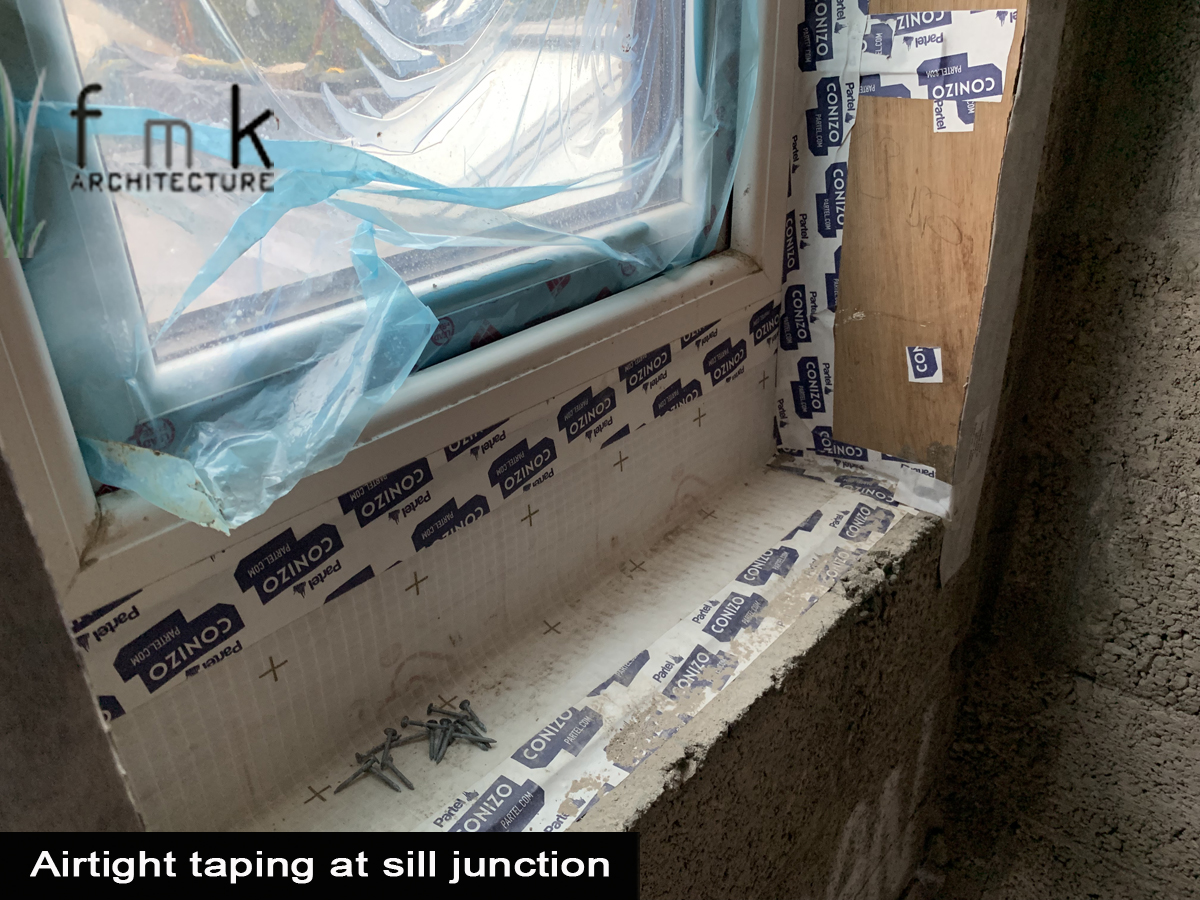
Airtightness is the control of airflow within a building. This means there is no unexpected air leakage (losing warm air) or no cold air infiltration from the exterior, especially in windy conditions.
In design and construction terms, this means that the external envelope is made airtight with the use of airtight membranes, tapes and liquid membranes along with careful detailing to ensure all areas are treated. The main benefit of airtight construction are:
Reduced heat loss.
• Reduced energy costs
• More even temperatures within the building (i.e. no draghts)
• Reduces risk of interstitial condensation within the external envelope
The Passive House Standard for an air test result is 0.6 Air Changes Per Hour@50Pa air pressure. Compared to the current Building Control requirement of less than 5 Air Changes Per Hour, you can see the enormous difference in air leakage from a Passive House construction and standard construction.
This test is carried out with a large fan system and is called the ‘Blower Door Test’. At FmK we offer our clients an intermediate blower door test with our own equipment at the time of applying the air tightness products so that any small leaks can be found and rectified at this time. This is much easier at this stage than trying to find leaks when everything is covered up. Making the house air tight is probably one of the more important and difficult parts of the build but with proper details and training, this is made easier.